Take a loan from your investment portfolio to avoid selling securities or paying higher interest rates

Investment accounts allow you to borrow ‘on margin’ at rates above the Federal funds rate. I’ll discuss how margin loans work at Altruist.com, the investment platform where I manage my clients’ & my family’s assets.

Margin borrowing

You can borrow against the value of your securities at these rates. Altruist currently charges +2.5% above the Federal Funds rate (~3.75% as of August 2026, so 6.25 % interest total) for loans up to $50,000, +2.25% for loans $50 K – $100 K, and +2% for loans between $100 K – $1 million. So far as I can tell, Altruist doesn’t charge any origination or other fees to use margin. (They charge $25 if they have to sell securities due to a margin call.)

Potential benefits of margin borrowing

If you are strapped for cash but don’t want to sell securities– perhaps to avoid taxes– and other financing alternatives are unavailable or too expensive for you (e.g.: HELOCs, personal loans, mortgage equity loans), then margin borrowing might provide a more cost-effective alternative.

Risks of margin borrowing

Margin calls if the market declines

If the market declines, you will get a ‘margin call’ where you must invest extra cash to avoid having your securities sold (presumably at a loss relative to when you started borrowing.) This can have a catastrophic cascading effect where you have to sell securities at a loss to bring cash, but you don’t HAVE cash because that’s why you were borrowing in the first place!

To avoid this, keep the percentage that you’re borrowing to at least half of the maximums allowed so that you can weather a 50% decline in stock market prices before being required to put up more cash.

Interest rate fluctuations

Because the rates charged are based the Federal funds rate, increases in that rate will increase your borrowing costs.

Historical Federal Funds Target Rate (1980–Present)

Key monetary policy cycles, emergency cuts, and inflation tightening eras.

20% 15% 10% 5% 0% 1980 1990 2000 2010 2020 20% Volcker Peak (1980) Zero-Bound (GFC) Inflation Tightening

Older married couples should strongly consider joint community property accounts if they live in community property states (Washington, California, etc)

Disclaimer: I’m not an attorney or accountant/CPA, and this is not legal or tax advice. Check anything I say here with your own attorney or tax advisor.

There are currently nine community property states, and a few others*** that allow the creation of community property. In Washington state, where I live, married couples’ property earned during their marriage is generally considered community property, such as income, property purchased, etc. Any property earned PRIOR to the marriage is considered separate property, unless the couple intentionally commingles it. Any gifts or inheritances received by one spouse during the marriage are also considered separate property.

IRS’s step-up basis rule defaults for differently-titled accounts in community property states

Individual accounts

When one spouse dies, any taxable assets held in that spouse’s individual taxable account should receive full step basis at death, meaning the surviving spouse can sell or gift those assets tax-free at the time of the deceased spouse’s death.

JTWROS

Any assets held in a Joint Tenants With Right of Survivorship (JTWROS) account could potentially only receive step-up basis on HALF the account’s value per default IRS treatment, but that half will transfer immediately to the other spouse without going through probate. JTWROS is usually the ‘default’ joint brokerage type at major brokerages. (For homes purchased while married, community property is the assumed ownership type for real estate in Washington state.)

I believe you can make the case to the IRS that the entire balance should be treated as community property, but that this might not work out and would be a hassle vs using a JCP. California may NOT respect this treatment at all with JTWROS, so either way, a JCP seems ‘safer’.

Joint Community Property (JCP) and CPWROS

If instead a couple chooses to move their assets into a joint community property account, the account MUST go through probate (no beneficiaries are allowed to be assigned), BUT it will receive double-step up basis at death, meaning the entire account balance will be stepped up when only one spouse passes away. Even better is a Community Property With Right of Survivorship (CPWROS) account, which allows double-step up basis AND avoid probate for the surviving spouse. This can be a huge tax advantage to the surviving spouse if there are highly-appreciated securities in that account. The con side is that the account must go through probate, but in Washington state, that is usually not a big deal, assuming that both spouses have their wills up to date. (Californians should do their own homework on the value of avoiding probate, as I understand it is much more onerous.)

Should married couples move their taxable assets into community property accounts?

The tradeoff is (1) potential tax-savings for the surviving spouse or other heirs that the surviving spouse might want to gift to vs (2) probate and (3) the loss of separate property treatment in the event of a divorce.

If one spouse had a significant inheritance from their parents that they’ve kept separately in their own individual account, a judge would likely award all of that to them in the event of a divorce, since it would be clearly their own separate property. If that spouse chooses to transfer any of that inheritance to a community property account, it is now owned 50-50 by both parties, and loses it’s separateness.

So, if you are not worried about divorce, you ARE worried about avoiding capital gains taxes, and you’re ok with the assets going through probate, moving money to a joint community property brokerage can be a wise move.

Recommendation

For older couples in solid relationships who are unlikely to ever divorce and who are comfortable navigating probate in their state (ex: Washingtonians), I would recommend they move their individual or JTWROS equity assets to a joint community property account to prepare for one of them passing away to avoid future capital gains taxes.

For younger couples in good health or with low capital gains with unequal amounts of separate property, it might be a good idea to wait on commingling everything into a community property brokerage in case they ever decide to separate, as roughly 50% of all marriages do.

Point of clarification

Retirement accounts like 401ks, IRAs, or other individual-only accounts like HSAs, are NOT eligible to be community property. Generally, taxable brokerage accounts, bank accounts, and real estate are things to consider making community property.]

Appendix

*** Wikipedia as of 2026-08-04: “Arizona, California, Idaho, Louisiana, Nevada, New Mexico, Texas, Washington, and Wisconsin [are community property states.]

Four other states have adopted optional community property systems. Alaska allows spouses to create community property by entering into a community property agreement or by creating a community property trust.[2] In 2010, Tennessee adopted a law similar to Alaska’s and allows residents and non-residents to opt into community property through a community property trust.[3] More recently, Kentucky adopted an optional community property system in 2020, allowing residents and non-residents to establish community property trusts.[4] Finally, Florida adopted a similar law in 2021, allowing citizens and noncitizens to establish community property trusts.”

Make a simple composting toilet for $30

Now that you’ve prepped for a 72 hour disaster with water, food, fuel, and meds, consider adding an emergency toilet. You don’t want to be flushing all your clean drinking or cleaning water down the drain if the water supply is disrupted for an extended period of time. Dudes can pee outdoors (urine is mostly sterile), but for ladies, kids, going #2, or inclement weather, it’s nice to have an indoor solution that can be safely disposed of.

Uses

A portable dry toilet is ideal for primitive camping, long road trips with young kids/small bladders, off-grid living, or even toilet training your children when having a ‘toilet’ in every room is the difference between accidents and success…

Make an emergency toilet

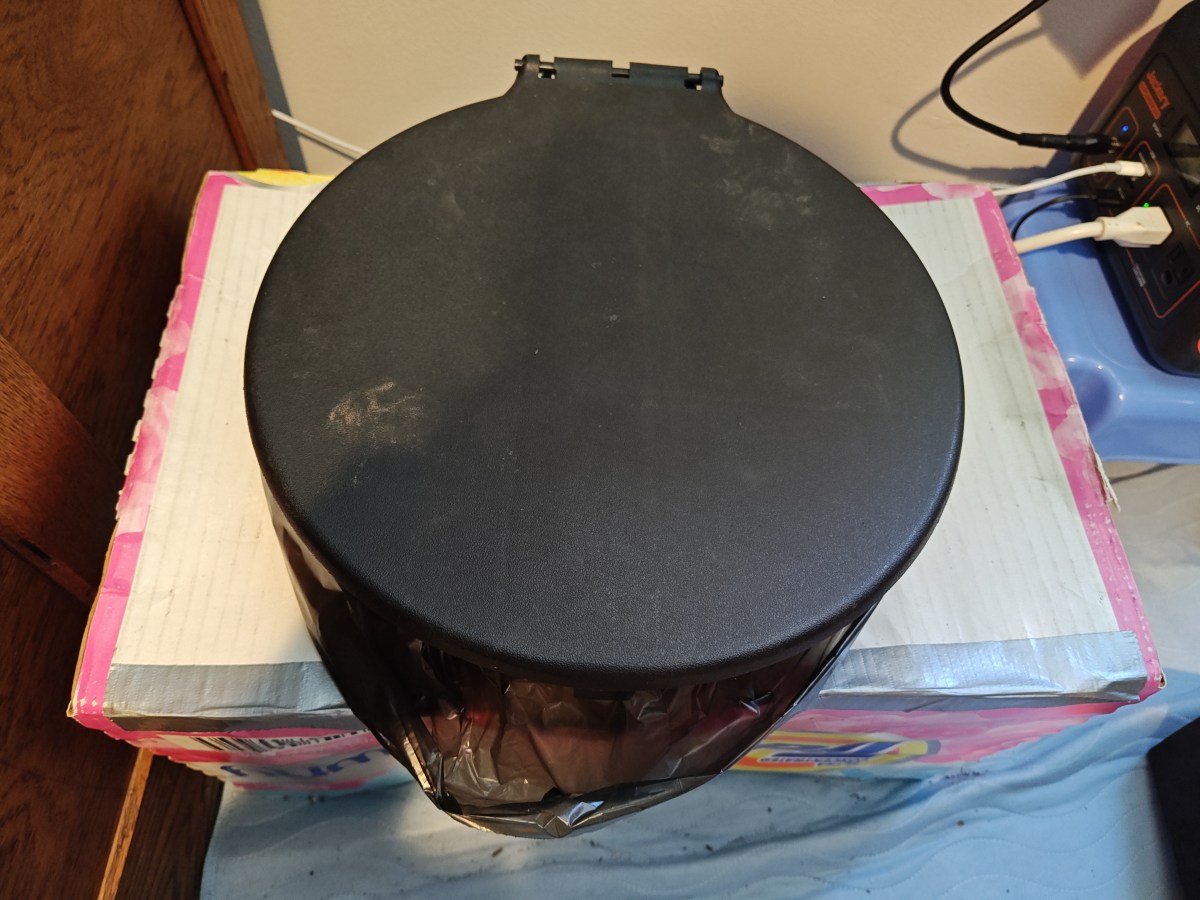
Get a 5 gallon bucket ($8). Then, order a snap-on toilet seat like this one ($17 as of July 2026.) The same company that makes that lid sells an all-in-one solution complete with a few bag liners for $31. Use the bags that come with the lid linked above to line it, or get some of your own. These 8 gallon composting bags are ideal if you’re going to compost your waste. Otherwise, use ~8 gallon plastic ones. Tie them up & dump them in your regular garbage once your bucket is full.

Simple, yet effective!

How to use your dry toilet

You’ll want a carbonaceous material like wood chips to cover the waste (~$1/pound for pine shavings on Amazon if you commit to 35 lbs, but I get mine for free from Chipdrop or a neighborhood arborist.) Kitty litter would work in a pinch. Do your business, then add a few scoops of wood chips to cover it. Even feces, once covered well and left to sit for a day or so, shouldn’t cause the toilet to stink when you open it again to use. Dirt could be used, but isn’t ideal IF you’re going to compost the waste yourself, because apparently it supports bacterial growth.

Toilet paper and anything else compostable goes straight into the toilet before you cover it up with wood chips. Keep a bin of the wood chips with a tight-sealing lid next to the dry toilet. Include a scoop or 16 oz empty plastic food container to add them to the bucket after each use.

Optional: you could keep a pee bucket separate from a poo bucket. Heavy users suggest that will keep the smell down. Ours is used infrequently by our young kids at home or camping: everything goes into one bucket, and it works just fine.

Keep adding wood chips if it ever begins to smell bad, or dump it into your trash or compost pile and start over.

How to dispose of the waste

Once you fill up the toilet with waste, dump the entire trash bag into your regular garbage (NOT the compost; the city frowns on that), or you can compost it yourself. Rinse the emptied bucket out outside with a garden hose. Or, scrub it with soap with a spare toilet bowl brush (less necessary if it looks pretty clean and you’re using a garbage bag liner) and let it drain. I let mine ‘sanitize’ & dry in the sunlight outside for a while. Then, line it with another trash bag and add a base layer of wood chips to get it ready for the next use. Wash your hands thoroughly afterward!

Composting your own waste

Use the method shown here by ‘humanure’ expert Joe Jenkins: Use a composting garbage bag (optional, but recommended for easier cleaning of the 5 gallon bucket). Move your covering material on your compost pile around to the sides of the bin (weeds, leaves, etc.) Make a hole with a shovel in the middle of your compost pile. Dump the waste into the hole, and spread it around evenly so it’s roughly flat. Add any kitchen or yard compost too like grass clippings, leaves, weeds, veggie scraps, coffee grounds, egg shells, etc (avoid meat or grains due to rats, unless your bin is very rodent proof.) Rake/shovel the covering material back on top of the newly-deposited waste to cover it up.

Let it sit until you need to repeat the process! No need to stir the compost around. Feces need to cure one whole year to be safe to use around your garden. They should be getting up to 130-160 F for several days during the year to sanitize things. You can measure the temp with a compost thermometer if you’re curious.

If you’re at all nervous about the safety of the composted feces, you can limit using it for trees, flowers, or anything else where it wouldn’t touch any edible part of a plant. If you’re generating a lot of compostable material, you can use a two (or even three) bin system where you still up one bin, let it ‘cure’ for a year, and switch to using the new bin. Once you fill up this second bin, you use the cured bin around the yard/garden, and repeat the process. Here’s a more detailed video on this system (9 minutes long).

If you’re starting a new compost pile, dig a shallow hole about 6″ deep in the center and layer it with weeds, wood chips, or other material. Add leaves or weeds on top of this, or on top of your initial dump of toilet waste, as your covering material.

Optional: Build a frame

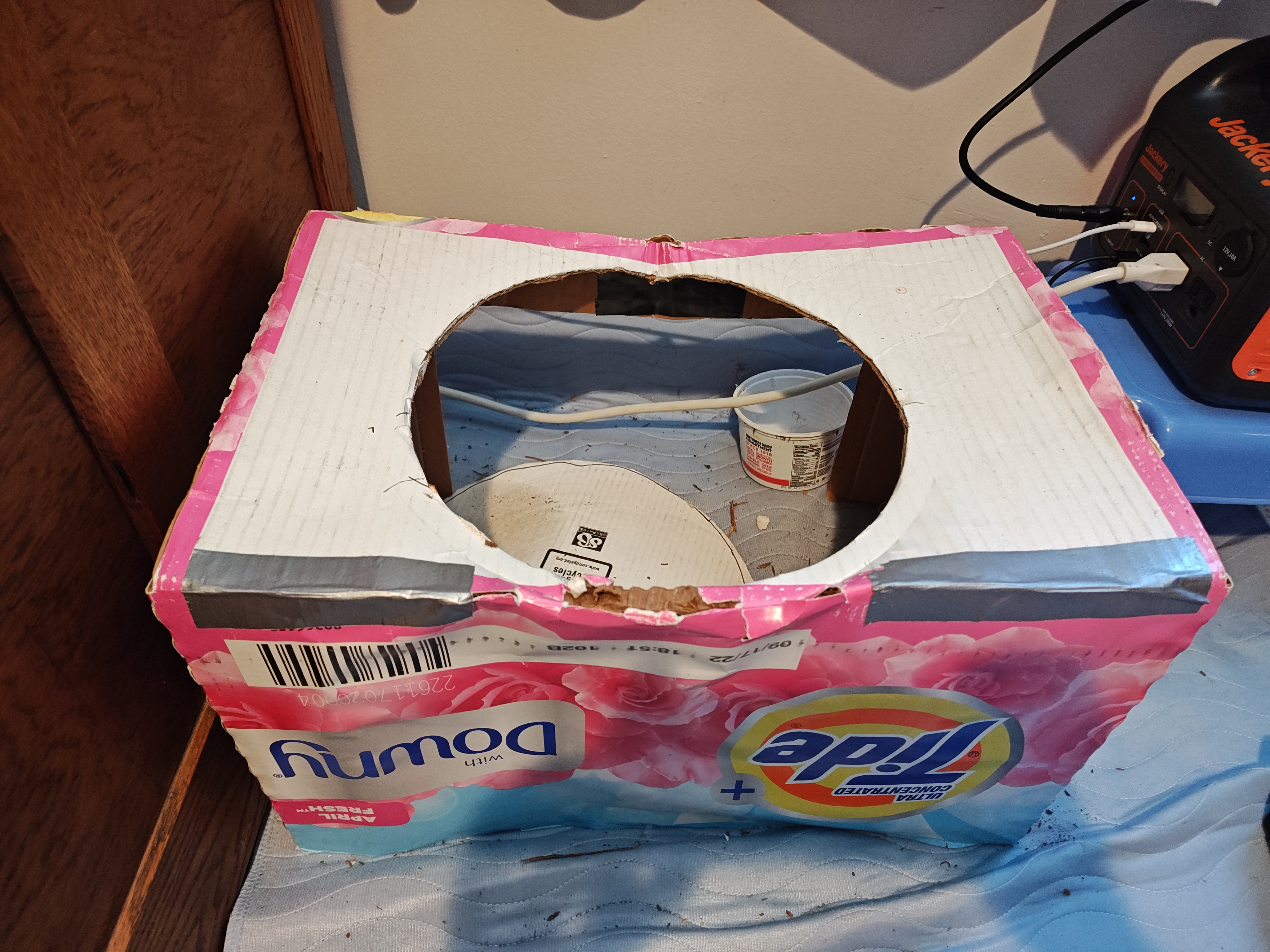
For semi-permanent installation, you could make a nice wood frame to slot the bucket in to. I do a simple Costco box frame where I trace the bottom of the bucket and cut a hole in it. It gives a bit of stability to it, which is better than nothing.

Resources

If you really want to nerd out on humanure, Joe Jenkins has a handy book which you can read free online, or checkout from your local library/buy a copy on Amazon.

United States Exit Tax for those who give up their US green card or citizenship

If you give up your green card or US citizenship, you must pay an ‘exit tax’ to do so.

Read the source of this article for really great in-depth info on the subject: https://www.greenbacktaxservices.com/knowledge-center/exit-taxes-us

[The exit tax involves] taxing the unrealized gains on [the person giving up their US personhood’s] worldwide assets as if they were sold for fair market value the day before they left.

Essentially, the IRS acts as if you sold all your property (houses, stocks, businesses) the day before you renounce citizenship, even if you didn’t actually sell anything. You are then taxed on the profit that those assets have built up over time.

[..] The U.S. State Department has reduced the renunciation fee to $450, effective April 13, 2026.

Per the article above, if you have less than $2 M in net assets (after subtracting debts), have remained 100% compliant on your US tax filing, AND have averaged less then ~$200,000 in actual annual tax payments (NOT income!) to the US for the past 5 years, you are NOT a ‘Covered Expatriate’, and do not have to pay any exit tax.

For most people working in a country with a US tax treaty who have continued to file in the US, they therefore would only get hit with the US exit tax if their net worth is over $2,000,000 when they renounce their citizenship/green card.

For Green Card holders, “[y]ou are only subject to these tests if you are considered a Long-Term Resident. This means you held your Green Card for at least part of 8 out of the last 15 tax years. If you leave in year seven, you can often avoid the exit tax entirely, regardless of your wealth.”

Exit Tax Exclusion amount

Even if you DO qualify for the Exit Tax, the IRS lets you exclude gains of $910,000 (for 2026), so you still might not pay anything, depending on your unrealized gains when you renounce.

Specified Tax-Deferred Accounts (IRAs and HSAs)

“If you are a “covered expatriate,” certain accounts are treated as if they were fully cashed out the day before you left. This is called deemed distribution.

  • Which accounts are affected?
    • Traditional IRAs, Roth IRAs, Health Savings Accounts (HSAs), and 529 College Savings Plans.
  • The Tax Hit: You must report the entire balance of these accounts as ordinary income on your final U.S. tax return.
  • The Downside: You cannot apply the $910,000 exclusion to these accounts. They are taxed from the very first dollar.
  • The Silver Lining: The IRS generally waives the 10% early withdrawal penalty for these deemed distributions, even if you are under age 59½.”