

Earthquakes (USGS source)? Pandemic? Civil unrest? Zombies? What’s your ‘favorite’ disaster scenario? Whatever it is, you’ll want at least 3 days’ worth of food, water, and potentially other supplies to hold out against the forces of doom. Why not git ‘er done right now?
Water
Count your family members and multiply by 3. That’s the # of gallons of water you should have on hand to survive for 72 hours. For our family of four, that’s 4 * 3 = 12 gallons. Then, buy your containers (check Walmart too as a cost comparison. Walmart had some nice, stackable 5 gal containers with spigots, which would be easier to transport vs 7 gals.)
Be able to lift a full container above your counter
Make sure you can lift them to counter or car trunk height when full. A gallon of water weighs a little over 8 lbs, so a 6 or 7 gallon tank is 50 or 58 pounds. If you’re smaller or frailer, consider getting 2 – 2.5 gallon– or even 1 gallon– containers instead of 6 – 7 gallons. Here’s a 4 gallon one with a useful handle, but just ok rating, or this 2.6 gallon one that would sit upright nicely and has a spigot.
Get containers with spigots
I also recommend containers with spigots that can be opened and closed so that you could set one on your kitchen counter or bathroom sink and use it like a faucet. These 7 gallon jugs I use have spigots, as do these stackable 5 gallon ones.
Consider one or two for car travel
In addition to the blue Reliance 7 gallon ones linked above, I bought two of these 6 gallon upright ones (no closable spigot; just a pour spout) that would be easier to put in a car for bugging out or camping.
Order your water containers
- Calculate the volume of water you need (people * 1 gal / day # of days = total gallons. If you’re European, multiple by 4 to get it in liters.) For a family of four for 72 hours, that’s 12 gallons, or two 6 or 7 gallon containers for ~$60.
- Buy the volume of water containers you need here.
- When they arrive, rinse them per any instructions then fill them from the tap with clean, slightly chlorinated water ASAP! They won’t do you any good if they’re empty.
- Store plastic in a dark, cool place. UV light and temperature extremes are enemies of plastic. If they might freeze, only fill ~3/4s of the way full to allow room to expand. I like to add an eye-drop of plain, chlorine bleach per gallon of water (maybe 1/8th tsp per 5 – 7 gallons) for longer storage. The chlorine will evaporate over time, so your water shouldn’t smell or taste like chlorine when it comes time to drink it. (If it does, let it sit open for longer before drinking.)
- Label the jugs with a piece of masking tape. Write the date, then try to remember to empty and refill them every couple of years to keep the water fresh. Worst case, you can always re-sanitize with bleach if you’re concerned.
Longer water supply
If you have a water filter or other means of sanitizing (see bleach notes above), a 50 gallon rain barrel that your gutters filter in to could hold a lot of water and be a more renewable source for holding out longer.
Emergency stashes already in your house
There’s also clean drinking water in your water heater as well as your toilet tank (not the bowl!)
Food
Assume 2,000 calories per family member per day * 3 days = 6,000 calories * the # of people in your house. For us, that’s 6,000 * 4 = 24,000. Now, what ready-to-eat, non-perishable foods could you eat for 3 days?
Laziest option: Peanut butter for the win
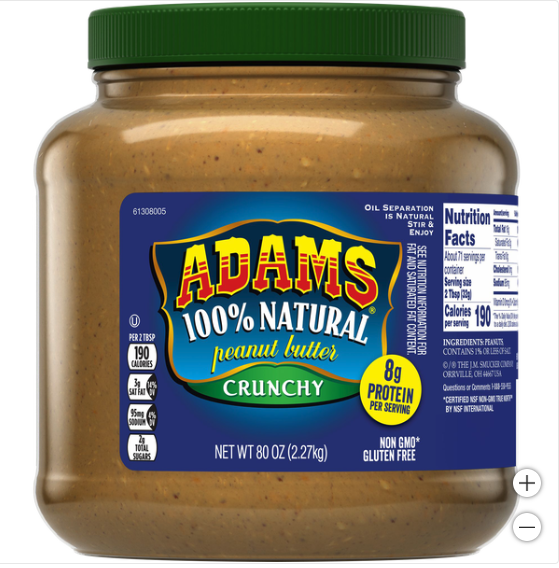
This 5 lb tub of peanut butter— available in Seattle-area Costcos, and delicious!– has 14,000 calories split between fat, carbs, and protein, is ready to eat, and loved by kids and adults alike. Two of those for ~$20 – $30 and you’re all set!
Store what you eat, eat what you store
Check your cabinets and pantries for what you already have on hand, as well as how much food is usually kept in your fridge. Add up the calories on the labels and log a rough total: multiply # of servings per container * calories per serving = calories per container. You might already have enough to survive for 3 days, but if not, supplement with some more non-perishables the next time you go shopping: Get thee to a Costco, and stock up.
Longer-term food storage
If you want to have food on hand for 2 weeks or more, the adage in the prepper community is to ‘store what you eat, eat what you store’. While it’s tempting to just buy a tub of Mountain House and call it a day, (1) have you eaten freeze dried meals for any length of time? They ain’t that tasty, and (2) they’ll eventually expire worthless if you aren’t regularly eating them as part of your usual meals.
I recommend you think about the non-perishables your family already eats, and just buy more of those to keep on the shelves. Eat the stuff with the most recent ‘best buy’ date first– keep them in the front of your cabinets, putting new stuff behind– so that you’re always renewing your supply with fresh canned or dried goods.
Ready-to-eat all-in-one foods like peanut butter or canned chili are good ones to start with, if you like them, since they don’t require fuel and equipment to cook. If you have a camp stove that can be used indoors and enough fuel on hand, supplement with dried pasta, rice, white flour, canned or dried proteins, and canned or dried veggies.
A tub of cooking oil is very calorically dense, since pure fat has 9 calories/gram, and (completely dry) carbs or protein have only 4 calories/gram.
72 hour survival, check!
Once your water jugs are filled and your food is purchased, pat yourself on the back! You and your family can make it 72 hours. If you want to prepare more, keep reading.
Fuel and stove for cooking
If you plan on cooking when the grid is down, a one-burner butane stove and some 8 oz canisters are an easy solution. Butane is apparently safe for indoor use (unlike propane!), but make sure your carbon monoxide detector is working (or get a portable one) and crack a window if you’re concerned.
Never use charcoal to cook indoors, but it’s a great outdoor option–as is propane– if you already have a grill.
Battery packs for emergency communication
A few battery packs to keep your phone or portable radio charged are good investments as well. You’ll want to listen in for emergency broadcasts and stay in touch with family and friends in unaffected areas (if cell towers are up.
Ham radio when cell towers are down or overloaded
To communicate when they aren’t, get a ham radio and/or a license to transmit on one. Some (non-transmitting) radios will have ham band ranges if you just want to be able to listen in. Make sure it can get the popular 2 meter band from 144 – 148 Mhz frequencies.
Heat
Kerosene heater
Get a 23,500 BTU (the most common size) kerosene heater if you live in a house that routinely gets below freezing in the winter. A five gallon container of 1-K kerosene should provide 23,500 BTUs for 8 hours a day of burn time for three days. As of writing, kerosene is abnormally expensive at ~$10 – $15/gallon.

If you live in a small, well-insulated apartment, you might be able to get by with a ~5,000 BTU candle lantern like this one. Buy extra candles too. Be very careful with open flames. Make sure a child or cat won’t knock it over and start a fire. Never leave it burning while you’re not watching it!

Woodstove
If you have a wood burning stove, make sure you have enough wood stacked and seasoned to keep the house warm on the coldest winter day for three days.
Get by without heat in a temperate climate
If you live in a temperate climate like we do in Seattle, you could put on your outdoor clothes during the day and tough it out under a stack of blankets at night.
Lighting
Make sure you have enough LED lights or lanterns to leave around the house, and extra batteries or a way to recharge them (say, a portable power pack or station.) You can of course use candles, but be very careful with open flames: keep them away from kids, pets, curtains or other flammables, and never leave them unattended. LEDs are so cheap and plentiful, it’s hard not to make the case to use them instead.
Flashlights or– my preference since they are hands-free– headlamps are also critical.
Medical supplies
Make sure you have any prescriptions filled, and have some band-aids, painkillers (ibuprofen or Tylenol) appropriate for the entire family (e.g.: children’s liquid version(s).) If you want to go down the medical prepping rabbit hole, I recommend this. It’s an overwhelming list, so maybe just start with
- ibuprofen (Advil) (don’t give to children under 1 year’s old!)
- Tylenol (acetaminophen) (generally the best choice for kids; check with your doctor),
- anti-allergy meds (ex: Benadryl aka Diphenhydramine HCl)
- prescriptions or kid’s meds (ex: liquid Tylenol/ibuprofen, cough syrup)
- bandaids of various sizes
- rubbing alcohol for sanitizing/cleaning
- gauze rolls
- medical/athletic tape
Print out dosage information for kid’s medications, and tape them to the back of your medicine cabinet or somewhere else close to your meds.
Med storage
Pills keep longer than gel tabs which keep longer than liquid meds. Keep your extra meds cold and dry, like in a basement. The effectiveness of most meds is much longer than the expiration dates on the bottles, per US military + FDA, and other studies. I feel comfortable stocking painkiller or anti-allergy pills for at least 10+ years unopened and away from heat & light, with the assumption that, worst-case, they’ll just be slightly less effective over time. (I’m not medical professional. Read the studies linked below or consult your doctor!)
[A] former director of FDA’s military drug testing program, said his experience with the program showed him that a manufacturer’s expiration date doesn’t indicate anything about a drug’s effectiveness […]:
“Manufacturers put expiration dates on for marketing, rather than scientific reasons,” he said. “It’s not profitable for them to have products on a shelf for 10 years. They want turnover.”
Source: https://www.deseret.com/2000/3/30/19556038/military-testing-expired-drugs/
“[Circa 2006 study:] Dr. Cathleen Clancy, associate medical director of National Capital Poison Center, a nonprofit organization affiliated with the George Washington University Medical Center, had heard of anyone being harmed by any expired drugs. Cantrell says there has been no recorded instance of such harm in medical literature.”
Source: https://www.propublica.org/article/the-myth-of-drug-expiration-dates
Where to buy medical supplies
Costco is great for bulk meds, rubbing alcohol, and sometimes band-aids. Amazon is great for anything you can’t find at Costco (gauze, medical tape, etc.) Your local drug store should also have these, but probably at double the price for some things.
Vitamins
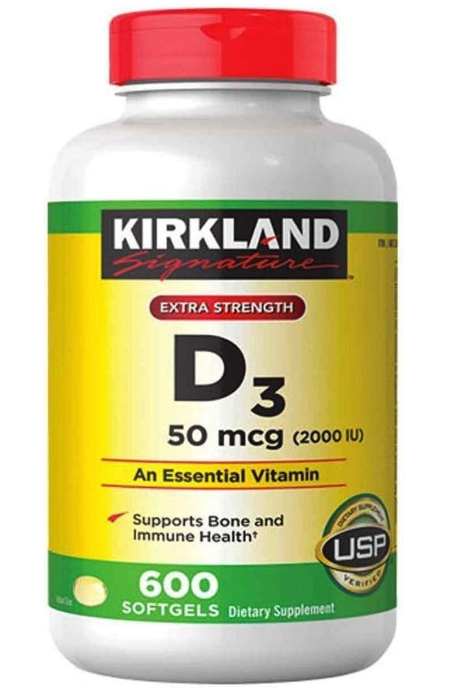
I have Vitamin D and C on hand for winter grayness– or the possibility of being forced to stay indoors– and lack of fresh fruits in a prolonged emergency, respectively. Costco is great for big bottles of pills.
Antibiotics
Save any unused antibiotics, or consult your doctor for an extra prescription of a broad-spectrum antibiotic like doxycycline or amoxicillin. Or you can get fancy and spend about $300 for a complete kit from Jase Medical. Don’t use these without doctor’s advice unless necessary.
Going to the bathroom without water
You could dig a trench in the backyard to do your business. You could also use your clean (or rain/gray) water supply by manually refilling your toilet tank each time you flush, but that’s a lot of work and a lot of water! Instead, I recommend you create a simple composting toilet for about $30. (Instead of reading that article, you can just buy this bucket toilet off Amazon for the quick win.)
