
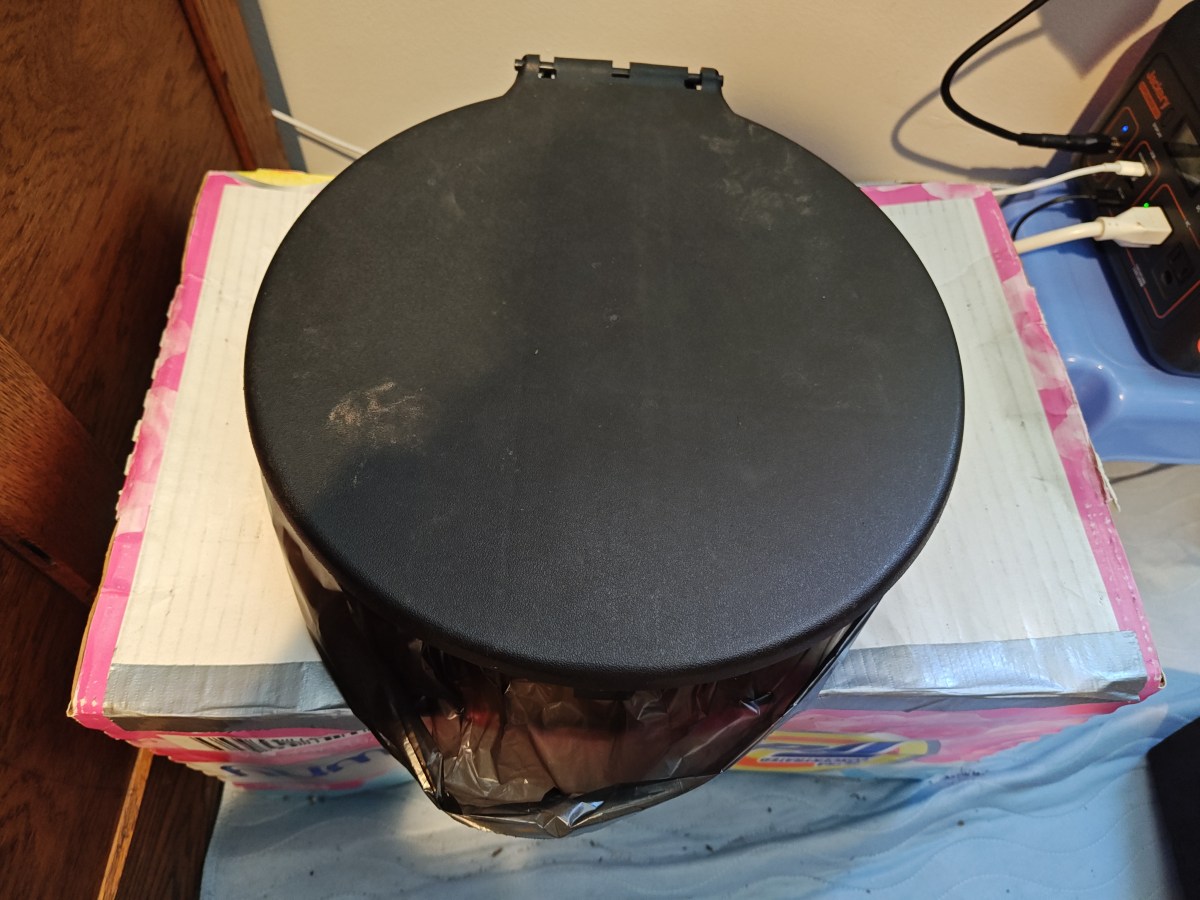
Now that you’ve prepped for a 72 hour disaster with water, food, fuel, and meds, consider adding an emergency toilet. You don’t want to be flushing all your clean drinking or cleaning water down the drain if the water supply is disrupted for an extended period of time. Dudes can pee outdoors (urine is mostly sterile), but for ladies, kids, going #2, or inclement weather, it’s nice to have an indoor solution that can be safely disposed of.
Uses
A portable dry toilet is ideal for primitive camping, long road trips with young kids/small bladders, off-grid living, or even toilet training your children when having a ‘toilet’ in every room is the difference between accidents and success…
Make an emergency toilet
Get a 5 gallon bucket ($8). Then, order a snap-on toilet seat like this one ($17 as of July 2026.) The same company that makes that lid sells an all-in-one solution complete with a few bag liners for $31. Use the bags that come with the lid linked above to line it, or get some of your own. These 8 gallon composting bags are ideal if you’re going to compost your waste. Otherwise, use ~8 gallon plastic ones. Tie them up & dump them in your regular garbage once your bucket is full.

How to use your dry toilet
You’ll want a carbonaceous material like wood chips to cover the waste (~$1/pound for pine shavings on Amazon if you commit to 35 lbs, but I get mine for free from Chipdrop or a neighborhood arborist.) Kitty litter would work in a pinch. Do your business, then add a few scoops of wood chips to cover it. Even feces, once covered well and left to sit for a day or so, shouldn’t cause the toilet to stink when you open it again to use. Dirt could be used, but isn’t ideal IF you’re going to compost the waste yourself, because apparently it supports bacterial growth.
Toilet paper and anything else compostable goes straight into the toilet before you cover it up with wood chips. Keep a bin of the wood chips with a tight-sealing lid next to the dry toilet. Include a scoop or 16 oz empty plastic food container to add them to the bucket after each use.
Optional: you could keep a pee bucket separate from a poo bucket. Heavy users suggest that will keep the smell down. Ours is used infrequently by our young kids at home or camping: everything goes into one bucket, and it works just fine.
Keep adding wood chips if it ever begins to smell bad, or dump it into your trash or compost pile and start over.
How to dispose of the waste
Once you fill up the toilet with waste, dump the entire trash bag into your regular garbage (NOT the compost; the city frowns on that), or you can compost it yourself. Rinse the emptied bucket out outside with a garden hose. Or, scrub it with soap with a spare toilet bowl brush (less necessary if it looks pretty clean and you’re using a garbage bag liner) and let it drain. I let mine ‘sanitize’ & dry in the sunlight outside for a while. Then, line it with another trash bag and add a base layer of wood chips to get it ready for the next use. Wash your hands thoroughly afterward!
Composting your own waste
Use the method shown here by ‘humanure’ expert Joe Jenkins: Use a composting garbage bag (optional, but recommended for easier cleaning of the 5 gallon bucket). Move your covering material on your compost pile around to the sides of the bin (weeds, leaves, etc.) Make a hole with a shovel in the middle of your compost pile. Dump the waste into the hole, and spread it around evenly so it’s roughly flat. Add any kitchen or yard compost too like grass clippings, leaves, weeds, veggie scraps, coffee grounds, egg shells, etc (avoid meat or grains due to rats, unless your bin is very rodent proof.) Rake/shovel the covering material back on top of the newly-deposited waste to cover it up.
Let it sit until you need to repeat the process! No need to stir the compost around. Feces need to cure one whole year to be safe to use around your garden. They should be getting up to 130-160 F for several days during the year to sanitize things. You can measure the temp with a compost thermometer if you’re curious.
If you’re at all nervous about the safety of the composted feces, you can limit using it for trees, flowers, or anything else where it wouldn’t touch any edible part of a plant. If you’re generating a lot of compostable material, you can use a two (or even three) bin system where you still up one bin, let it ‘cure’ for a year, and switch to using the new bin. Once you fill up this second bin, you use the cured bin around the yard/garden, and repeat the process. Here’s a more detailed video on this system (9 minutes long).
If you’re starting a new compost pile, dig a shallow hole about 6″ deep in the center and layer it with weeds, wood chips, or other material. Add leaves or weeds on top of this, or on top of your initial dump of toilet waste, as your covering material.
Optional: Build a frame
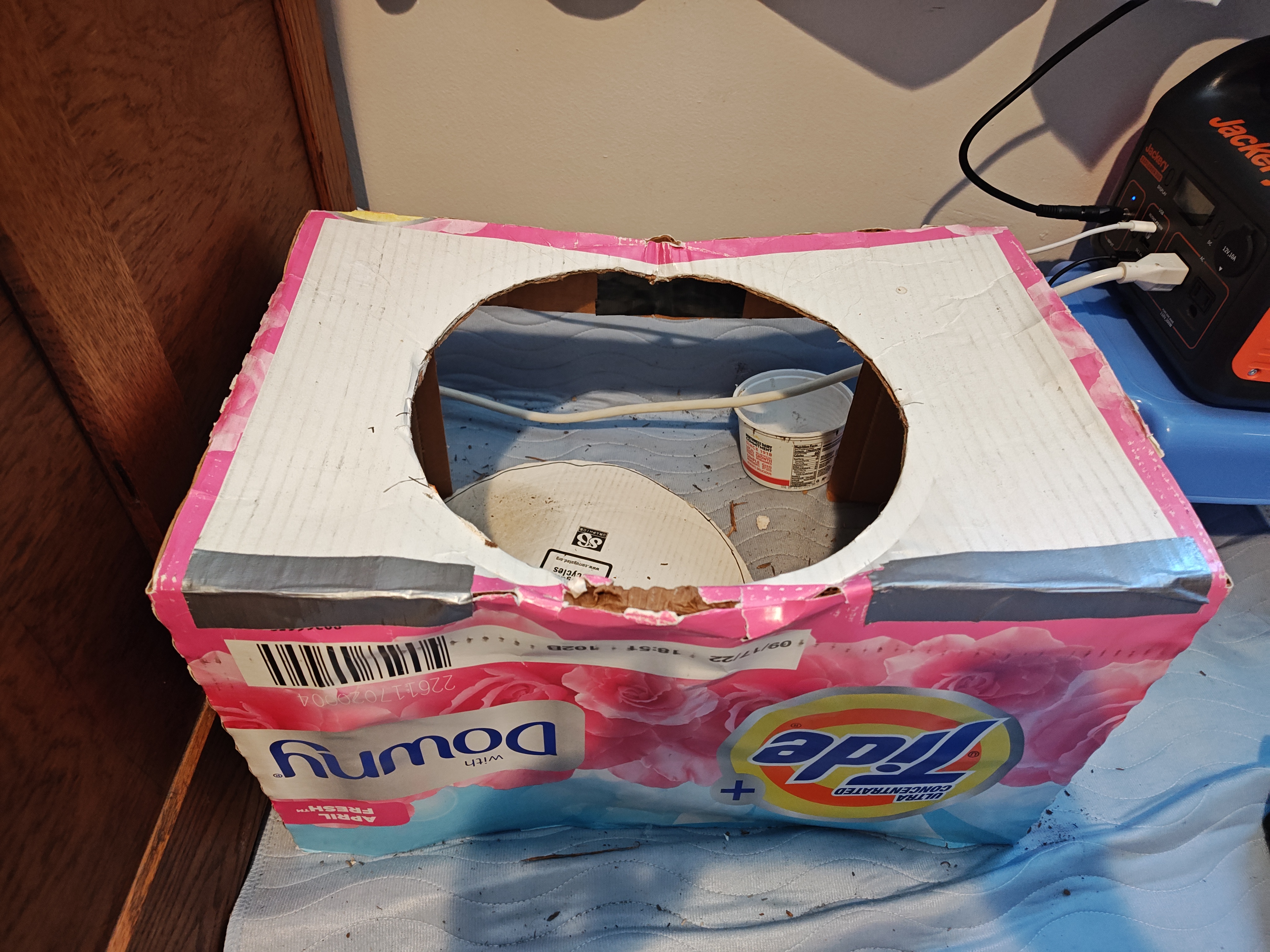
For semi-permanent installation, you could make a nice wood frame to slot the bucket in to. I do a simple Costco box frame where I trace the bottom of the bucket and cut a hole in it. It gives a bit of stability to it, which is better than nothing.
Resources
If you really want to nerd out on humanure, Joe Jenkins has a handy book which you can read free online, or checkout from your local library/buy a copy on Amazon.
