
Warning: Last updated 3/26/2026: This information is preliminary and will be updated later as the IRS guidance on Trump Accounts develops.
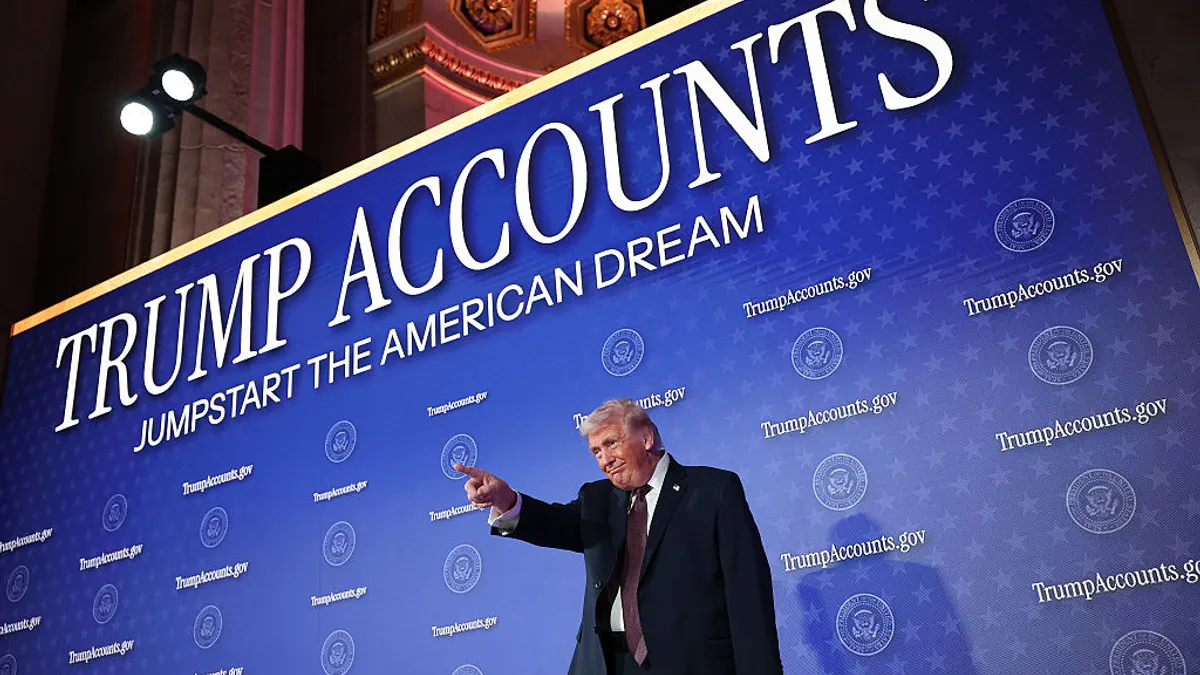
Starting around July 2026, Americans have another tax-advantaged savings account to take advantage of: Trump Accounts, known in the tax code as 530A accounts. If your child was born between 2025 – 2028, you will also get $1,000 tax-free from the Federal government. Sign up all your kids online at https://form.trumpaccounts.gov, where you electronically submit the enrollment IRS Form 4547. Submit more than one form if you’re opening accounts for more than 2 kids.
Parents can fund them while the child is 0 – 17 (by year end.) Once the child is 18, the account can become a Traditional IRA owned & managed by the (now adult) child.
Why open a Trump Account?
If your child was born 2025 – 2028, it’s worth it just to get the $1,000. Your employer might contribute as well in the future.
Most contribution sources, including friends, family, and employers, are capped at a combined annual limit of $5,000 in 2026, indexed to inflation. The $1 K Federal seed money and certain qualified non-profit contributions won’t count towards the annual limit.
If your employer offers payroll contributions (up to an IRS max of $2,500 per employee, regardless of how many children the employee has; you can split up the amount by child), you can contribute pre-tax as well, just like your 401k, which you should definitely do if you have the cash to invest and want it to go to your kid(s).
Anyone else could also contribute, including you as the parent outside of your employer, but on an after-tax basis, which is not nearly so enticing as pre-tax payroll deductions. Generally, you’d be better off using a UTMA/529 or your own taxable brokerage instead of an after-tax Trump account contribution.
Make sure to keep track of the account’s cost basis over time for your child if you make non-deductible/after-tax contributions.
At 18, Trump Accounts are supposed to behave like Traditional IRAs, at which point you should be able to either convert them entirely to Roth IRAs, perhaps over a period of a few years while your child has low earned income.
Or, if your child gets a 401k, they can isolate the basis and convert just the after-tax basis of the Trump Account to Roth IRA, and simultaneously move the pre-tax amounts to their 401k. This is the best option for most folks.
What investments can you choose?
Investments will be low-fee (< 0.1%) index funds. That’s all I know as of early 2026.
How will Trump Accounts be taxed?
Like Traditional IRAs, apparently. Your child gets control of them at 18–they are ‘locked’ prior to then, only open for contributions & investing, not withdrawals– and could use the funds for education or a first-time home purchase (standard IRA exceptions), paying just regular income taxes (which might be low depending on their tax bracket), and no 10% penalty that a regular withdrawal for an unqualified purpose would incur.
How are withdrawals ordered for tax purposes?
“Withdrawals of pre-tax contributions and earnings (on both pre-tax and after-tax contributions) taken between ages 18 and 59 ½ will be subject to ordinary income tax. In most cases, a 10 percent early withdrawal penalty will also apply.
However, the 10 percent penalty may be waived for qualified expenses, such as higher education costs or a first-time home purchase.
Although after-tax contributions may be withdrawn without additional income tax, distributions must be taken proportionally. This means the account holder cannot withdraw only after-tax contributions; each distribution will consist of both taxable and non-taxable amounts. [WW: ‘Cream in the coffee’ rules. Credit to Ed Slott.]
After age 18, Roth conversions are permitted. This strategy may allow after-tax funds to grow tax-free in the future, depending on individual circumstances. Normal distribution rules apply once the child reaches age 59 ½.”
